Other forms of justice
Often survivors of CRSV do not get the chance to receive legal, quasi-legal or non-legal justice as explained in the other sections on justice, or survivors do not wish to go that route. There are many other forms of justice that can do justice to their stories and agency. In this way, their legacy lives on, so that they are not to be forgotten. These forms of justice are a call for attention to these crimes and to prevent and end CRSV once and for all.
Such “other forms of justice” can be found in, for example: art; museums/memorial sites; documentaries and movies; 3-D platforms; virtual and augmented reality; theatre; radio and tv; poetry; books; songs; exhibitions; podcasts; educational campaigns; important international commemorating days; and survivor-centered and survivor led groups. Survivors of CRSV have different kind of involvements in the creation, design and execution of these forms of justice: sometimes partially, sometimes fully, and sometimes other people implement on their behalf.
Here are some examples (one example per category):
Art
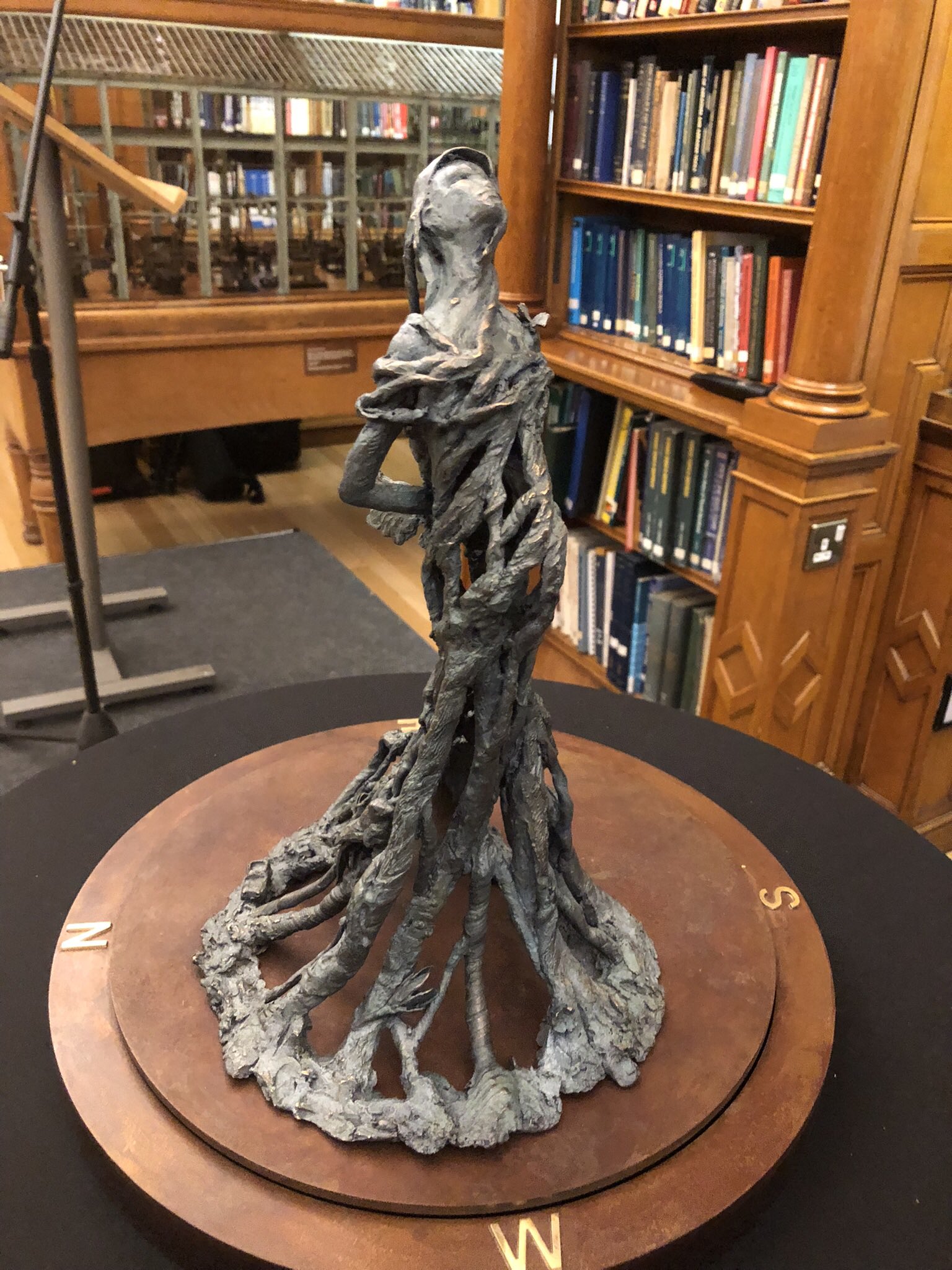
(source: Impact)
“Petrified Survivors” is a memorial for all survivors of sexual violence in conflict around the world, designed by artist Rebecca Hawkins.
More information, see: https://laidaihanjustice.org/petrified-survivors/
Museums/memorial sites
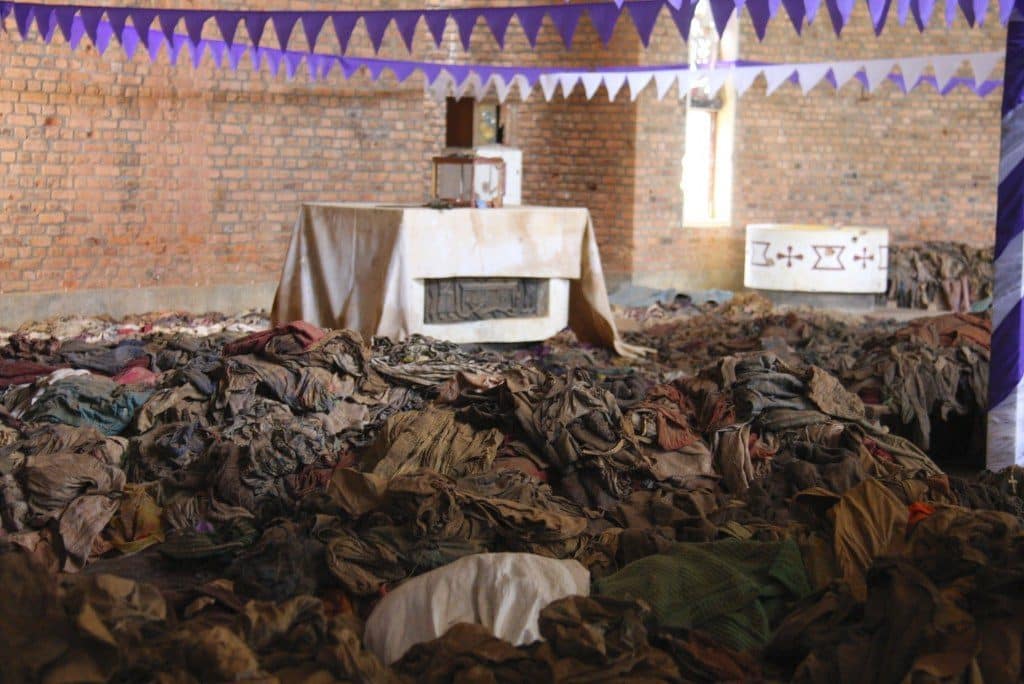
(source: KT Press)
In Rwanda there are several memorials/museums where genocidal sexual violence committed against the Tutsi in Rwanda in 1994 is memorialised. For example, at the Nyamata Memorial Site, a former church in Nyamata where people sought refuge during the genocide, and where Annonciata Mukandoli, a victims of sexual violence, is buried. Another example concerns the Gisozi Memorial Centre in Kigali, with hundreds of thousands of victims have been reburied. Here descriptive banners on sexual violence are displayed. At the Ntarama Memorial Site, also a former church, a stick that was commonly used to rape women, is on display.
Documentaries and movies
(source: Vimeo, Khmer Mekong Films)
In the 53 minutes documentary called “Breaking the Silence – sexual violence under the Khmer Rouge” (2017), produced by Lov Sophea, survivors in Cambodia challenge the stigma around sexual violence encountered during the Khmer Rouge, nearly 40 years later. “Breaking the Silence” examines the prosecution of crimes of sexual violence before the Khmer Rouge Tribunal. It does so through courtroom testimony, archival footage, interviews with experts, practitioners and scholars. It highlights contemporary reparations projects related to addressing the harm suffered in the past. The film reports on the history of forced marriage and sexual violence under the Khmer Rouge regime and analyses the impact of these crimes and their prosecution on contemporary Cambodian society.
(source: YouTube)
In the movie “In the Land of Blood and Honey” (2011), directed by Angelina Jolie, a Bosnian Serb police officer and a Bosnian Muslim artist are lovers before the outbreak of war, but land on opposite sides of the conflict as violence engulfs the Balkan region.
For an overview of documentaries and movies, see, for instance, the PSVI film festival site: https://www.gov.uk/government/publications/psvi-film-festival-fighting-stigma-through-film-schedules/psvi-film-festival-schedule-23-to-24-november-2018-and-film-descriptions
Radio and TV
“Musekeweya (“New dawn”) is a fictional radio soap opera produced by Radio La Benevolencija, a Dutch NGO that has been working in Rwanda since 2003. The central mission of the organization is to empower groups and individuals that form the target of hate speech and ensuing acts, and to strengthen the population as a whole to resist incitement to violence. “New dawn” explicitly means the end of sad times, and the start of brighter days.”
For more information, see: https://www.musekeweya.org/musekeweya.php
Survivor-centered initiatives and survivor-led groups
Having survivors of CRSV being central to all forms of justice taken (deliberations, design, implementation) is key to responding to their needs.
The FCDO’s Preventing Sexual Violence Initiative (PSVI) held a retreat in 2023 at Wilton Park with survivors of CRSV: “Placing survivors at the centre of discussions around preventing conflict-related sexual violence (CRSV) is key to making progress in the field. ‘For Survivors, With Survivors’ is a mantra for action, not just a slogan. In practice, providing a truly safe space for people who have suffered the worst crimes that can be committed against a human being, to talk about their experiences and discuss ways to prevent such violence happening to other people, is a challenging but essential task. (…) This year, with FCDO support and the leadership, advice and inspiration of the UK’s PSVI Survivor Champions, Nadine Tunasi and Kolbassia Haoussou, it finally happened. The people we brought together are all survivors of sexual violence inflicted on them during armed conflict, representing women from DRC, Sierra Leone, Kosovo, men and boys from Colombia and Nepal, young Yazidi women, and children born of rape in Bosnia, Kenya and Uganda. All are now in positions of leadership, running projects to support other victims; providing training, legal, medical and psychological support and advising governments; using their own experiences to inform and improve policy making as it affects survivors. They came to Wilton Park to share that learning, to discuss ways in which to improve peer support, and to strengthen links with people from government and non governmental organisations, so that they can further influence policies and legal processes in their own countries and regions and through the international system. (…) Participants identified key actions required to address CRSV, including promoting gender equality, taking a survivor-centred approach to justice and accountability, and providing support to families and the wider community.”
For more information, see: https://www.wiltonpark.org.uk/idea/supporting-survivor-leadership/
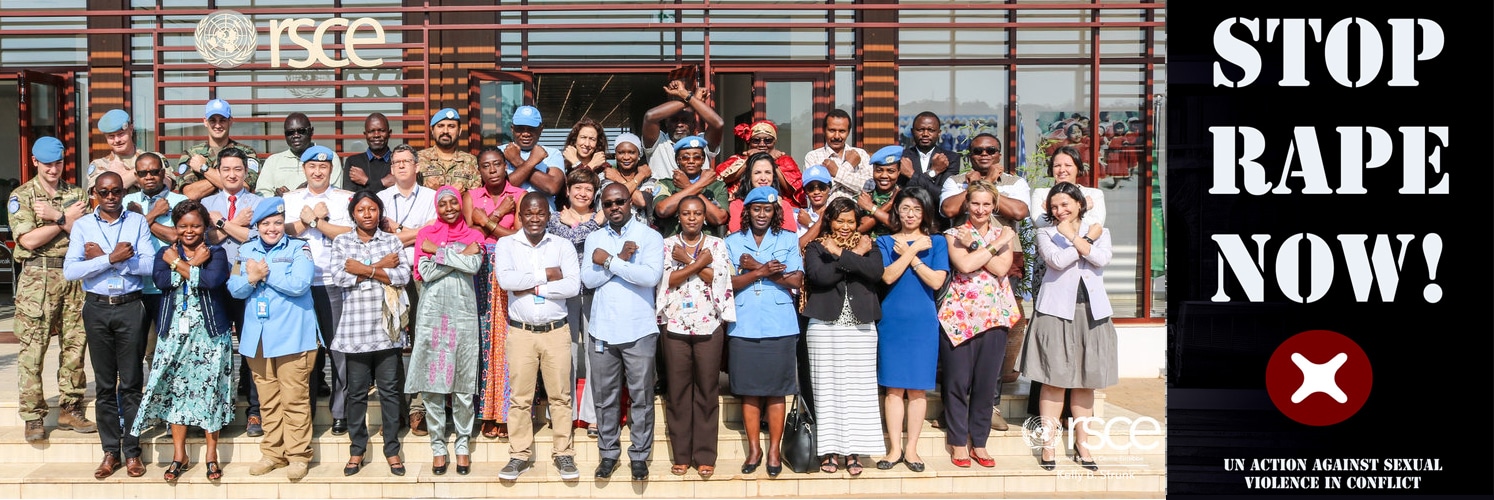
(source: UN Action against Sexual Violence in Conflict)
Educating people about CRSV and calls to end such violence can be another form of justice too. The picture displays people calling for such action and similar pictures have been distributed on social media around the world, especially on important international days, such as 19 June, the internationally recognised “International Day for the Elimination of Sexual Violence in Conflict.”
3-D Platforms
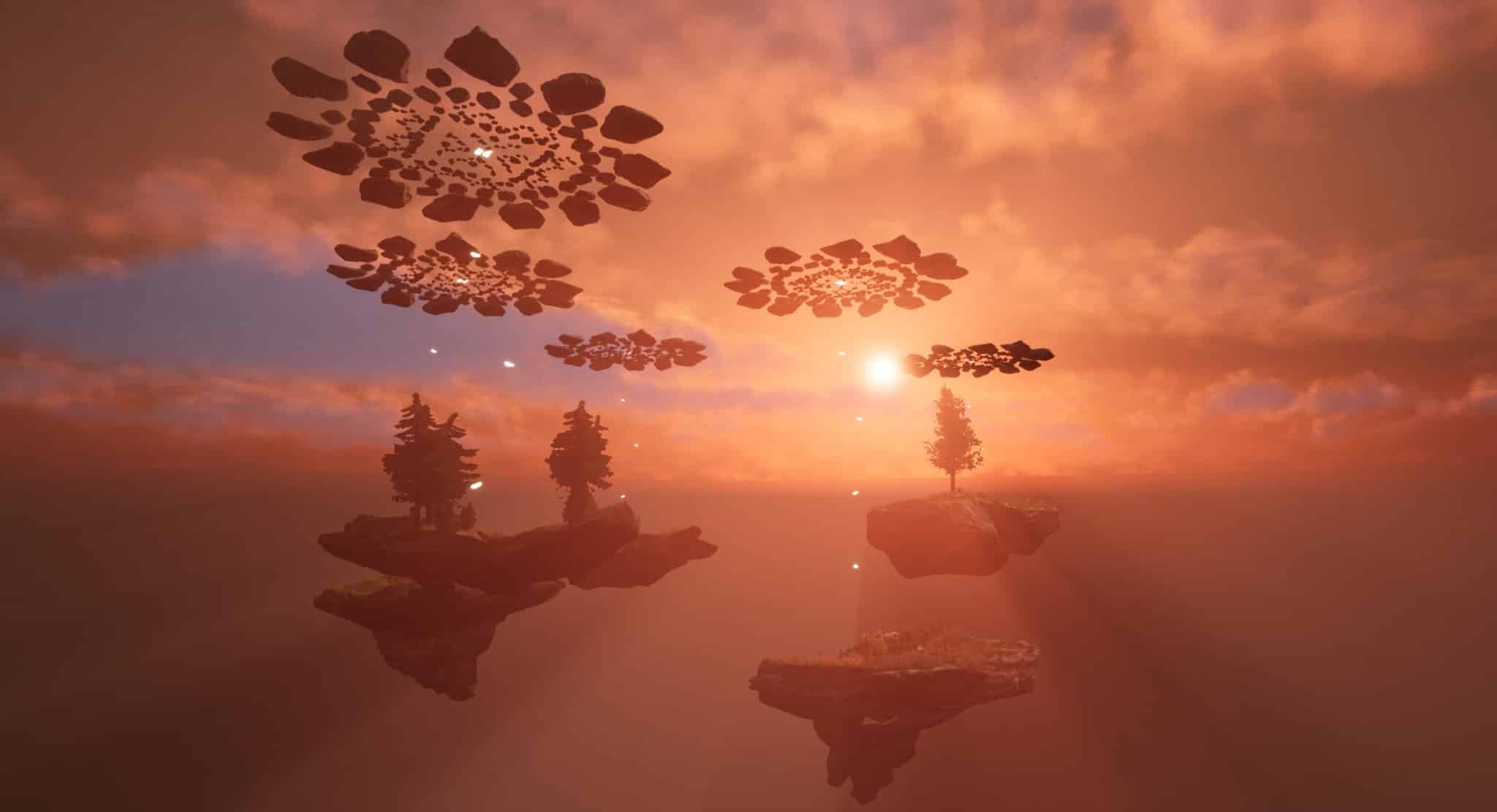
(source: Huu:)
“Huu: is a virtual mnemonic landscape based on personal histories of 22 survivors of sexual violence in the war in Bosnia and Herzegovina in 1992-1995 and the genocide against the Tutsi in Rwanda in 1994. The voices of these women and men inhabit an archipelago of floating islands, where each ecosystem reveals particular memories of a certain participant, in their journey from trauma to healing. We travel through these islands as wind, creating subtle gestures over waters and plant species – unveiling the documentary audio-recordings. As an intersection between ecological and personal memories, this project creates a safe space for survivors to tell their stories, giving them a chance to speak up about experiences which oftentimes remain taboo in their local societies. Huu: makes it possible for participants from geographically distant war and genocide-torn countries to unite in a virtual space and co-create a healing archipelago.”
For more information, see: https://huu.world/
Virtual reality (VR) and augmented reality (AR)
(source: YouTube, IOM Iraq)
VR and AR has the potential to support survivors of CRSV. It has been used by survivors to tell their stories. In “Nobody’s Listening” is an immersive exhibition with a virtual reality experience that includes an account from a young Yazidi woman who was abducted and sexually enslaved by ISIS. The VR aims to put the genocide committed by ISIS back on the international agenda and to bring real change for Yazidis and other victims.
For more information, see: https://www.nobodys-listening.com/
Theater
(source: YouTube, UNFPA in Bosnia and Herzegovina (BiH))
“UNFPA in BiH has developed several innovative partnerships with young people, such as the use of theatre as a platform and local initiatives to open local dialogue on harms of stigmatization against survivors of conflict related sexual violence but also on positive efforts that would enable survivors to feel as part of the community.”
Books
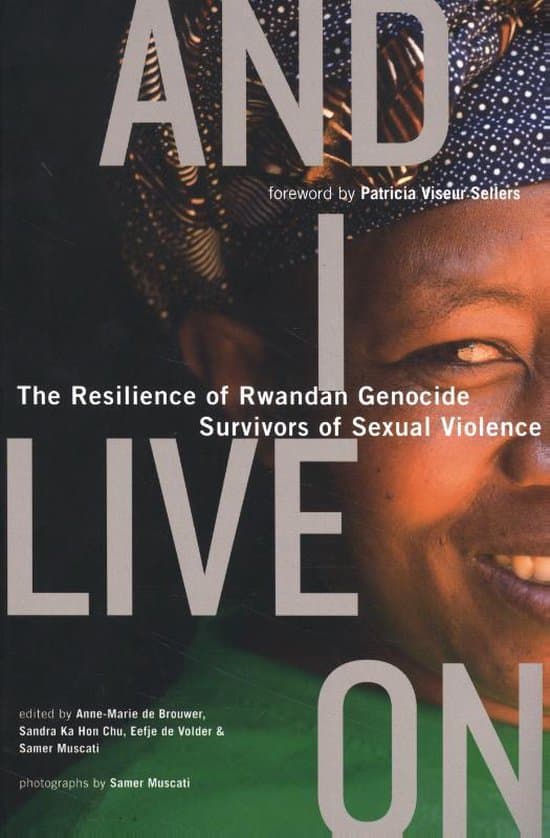
(source: And I Live On)
And I Live On: The Resilience of Rwandan Genocide Survivors of Sexual Violence (Wolf Legal Publishers, 2019) features searing testimonials and photos from Rwandan survivors of the genocide against the Tutsi 15 and 25 years after the horrific events of 1994. “Through their narratives and Samer Muscati’s powerful portraits, these women and one man bear witness to the crimes committed in their country and to the suffering they continue to endure. The testimonials also showcase the survivors’ extraordinary strength, courage and resilience – challenging the stigma they face both as survivors of sexual violence and as people living with HIV. In speaking out, they provide a glimpse into the worlds of survivors living with the genocide’s legacy decades after a conflict. Their stories, along with the accompanying text, make an indelible impact.”
For more information, see: https://digi-courses.com/and-i-live-on/
You can already read one story in the book here, that of Pascasie.
Poetry
(source: YouTube, Mukwege Foundation)
“Survivors of conflict-related sexual violence in the Central African Republic counter the stigmas and stereotypes attached to them through a slam poetry called “Breaking the Silence”. Survivors who are members of MOSUCA (Mouvement des Survivantes de Violences Sexuelles en Centrafrique) and CNAV-CA (Collectif national des associations de victimes de Centrafrique) have been working on the lyrics and tunes with Gad Le Slameur. They created the slam poetry as part of a collective memory initiative to break the silence around confllict-related sexual violence in the Republic. Through this initiative, survivors challenge the harmful beliefs, myths, indifference, and stigmas attached to them.”
For more information, see: https://www.mukwegefoundation.org/creating-collective-memory-through-art/
Songs
(source: YouTube, Mukwege Foundation)
SEMA members – survivors of CRSV from all around the world – have created several songs, including “Solidarity” and “Little Bird”. For example, during a retreat, “survivors had a jam session with Make Music Matter and Marie Daulne (a.k.a Zap Mama). Make Music Matter, a Canadian-based NGO and longstanding partner of the Mukwege Foundation, offers group music therapy for sexual violence survivors. Working with a trained psychologist and music producer, participants write and record songs about their experiences, some of which are later disseminated for advocacy purposes. Through this collaboration, SEMA members created the song, “Solidarity”.” SEMA members also created the song “Little Bird”.
For more information, see: https://www.mukwegefoundation.org/creating-collective-memory-through-art/
Exhibitions
In 2021, the War Childhood Museum opened its new temporary exhibition – “Speaking Out” – dedicated to and co-produced with survivors of conflict-related sexual violence and children born of war in Bosnia and Herzegovina (BiH): “Through stories, exhibits, and video testimonies, the Exhibition created a platform for the CRSV survivors and children born of war to share their experiences, while highlighting both the manifold issues they face in everyday life and their hopes for the future. Following the exhibition’s production and initial showings in BiH (Sarajevo, Mostar) and Serbia (Belgrade), “Speaking Out” continued to make impact in different ways, as an example of good practice for aiding Ukrainian CRSV survivors in Moldova, and as a powerful advocacy tool of children born of war seeking legal recognition in BiH.”
For more information, see: https://warchildhood.org/speaking-out-exhibition-experiences-of-crsv-survivors-and-children-born-of-war/
Commemorating important international days
There are several days throughout the year on which specific issues are commemorated, including 19 June, the International Day for the Elimination of Sexual Violence in Conflict.
This day marks the adoption of the first Security Council resolution to recognise CRSV as a tactic of war and threat to international peace and security (UNSC Res. 1820 of 2008). On this day, different organisations and individuals highlight the importance to end CRSV; for example, by having different events, lectures, etc. On this day, people from around the world, stand in solidarity with survivors of these crimes.
Other important commemorating days include days that are of importance to, for instance, certain countries/conflicts/people, such as 7 April, the day on which Rwandans commemorate the start of the genocide against the Tutsi in Rwanda in 1994.
For more information, see: https://www.internationaldays.org/june/international-day-for-the-elimination-of-sexual-violence-in-conflict#:~:text=PURPOSE%3A%20The%20International%20Day%20for,international%20peace%20and%20security%20as
Podcasts
Podcasts can also be helpful to discuss CRSV. There are a few podcasts on exactly this topic:
According to the CRSV Observatory Podcast: “The CRSV Observatory is a memory project aimed at dismantling the historical silencing, sidelining, and erasure of conflict-related sexual violence. The Observatory documents cases where sexual violence has been deliberately and systemically deployed to target particular sections of society against backgrounds of violent conflict.
This podcast brings to you voices from the ground, reporting on ongoing efforts and work toward preventing, responding to, and addressing systemic and conflict-related sexual violence. Listen in to experts working in the field, researchers who dedicate their time and attention to understanding CRSV, and policymakers who push for change through their work.” The podcast can also be found on Spotify.
The ALL Survivors Project podcasts aim to deepen and broaden dialogue on CRSV committed against men, boys, and/including LGBTI+ people.

Assignment 1
Other forms of justice than purely legal accountability can be very helpful to address and prevent CRSV. Pick three “other forms of justice” (e.g. art, theatre etc.) and look up different examples that have been implemented around the world. Explain in short what they are about and include references where they can be found.
Assignment 2
Discuss within a group what a good prevention and/or awareness raising campaign (art, video, tv, social media, poster, or other material) would be with regard to conflict-related sexual violence. Each group will discuss at least the following elements of the campaign:
-
- The portrayal of the victims and perpetrators;
- The target audience;
- The word and/or design (photo or otherwise) use;
- The use of campaign material;
- Otherwise…. (everything else that is missing from this list).
Each group will write down on one A4 page (one side) their evaluation per element. Based on the findings of different groups, it may be possible to see what is needed to create the perfect prevention/awareness campaign on CRSV (what characteristics are in common, which are not).