Psychological consequences and needs
CRSV has a destructive psychological, emotional, and spiritual impact on victims/survivors, and a number of difficult, and often long-lasting, psychological consequences can be catalyzed. Among these, continued experiences of trauma and emotional distress are highly prevalent, and various therapeutic modalities (individual, group, and community-based psychosocial interventions) have been developed specific to victims/survivors of CRSV.
The following is a non-exhaustive list of psychological consequences as a result of CRSV:
-
- Trauma-related conditions: Post-traumatic stress disorder (PTSD); anxiety disorders; psychosis; dissociation; psychogenic pain; phobias; major depressive disorder; psychosomatic disorders; and experiences (e.g. conversion-dissociative disorder and psychogenic pain).
- Impacts on mood and emotion: Grief; sorrow; feelings of helplessness; fear (e.g. fear of rape); disgust; emotional detachment; fatigue; confusion; and irritability.
- Identity, relational, and sexual consequences: Low self-esteem; self-blame; shame; distrust; neglect (of self or children, including those born as a result of CRSV); emotional detachment; substance abuse; suicidality (considered, attempted, or completed); premature aging; feeling emasculated; confusion or fears regarding sexual orientation; diminished interest in – or avoidance of – sex; and sexual “dysfunction”.
This section will expand on the following psychological consequences of CRSV (and ends with two best practice examples on how the psychological needs of survivors of CRSV can be addressed):
-
- Trauma-related conditions: PTSD and psychosomatic illness
- Identity and relational consequences: Children born as a result of CRSV and self-esteem
In this section, the word “psychological” is used. It refers to internal mental and emotional processes an individual experiences. “Psychosocial” refers to external social and interpersonal influences that can affect an individual’s psychological well-being. In this section, when the term psychological is used, it also includes the psychosocial impacts, as CRSV leads to both consequences and needs.
I. Trauma-Related Conditions: PTSD and Psychosomatic Illness
Victims/survivors of CRSV often experience an acute phase of trauma. This may be characterized by protective psychological mechanisms including shock, denial, dissociation, and other reactions that allow bracing for the aftermath of CRSV. Among victims/survivors, continued distress relating to trauma is not uncommon. This can result in post-traumatic stress disorder, major depressive disorder, anxiety disorders, psychosomatic disorders, and other profound conditions that can persist up to a lifetime without the necessary means of support.
Example: Post-Traumatic Stress Disorder (PTSD)
PTSD has been identified as common among victims/survivors of CRSV, and symptoms have been recorded at a greater severity. It is characterized by a range of possible behavioral and emotional experiences, including reliving disturbing memories or having nightmares and flashbacks, anger control impairment and desire for vengeance, being startled without the presence of new danger (hyper-arousal), and avoidance of places, items, thoughts, feelings, and activities reminiscent of the traumatic experience (which may include psychological numbing or detachment). While not every victim/survivor will look for psychological support, individual counseling (general or specialized), and community- and group-based initiatives (to process experiences and constructively re-live and re-integrate painful memories) are among the ways in which PTSD is addressed among victims/survivors of CRSV
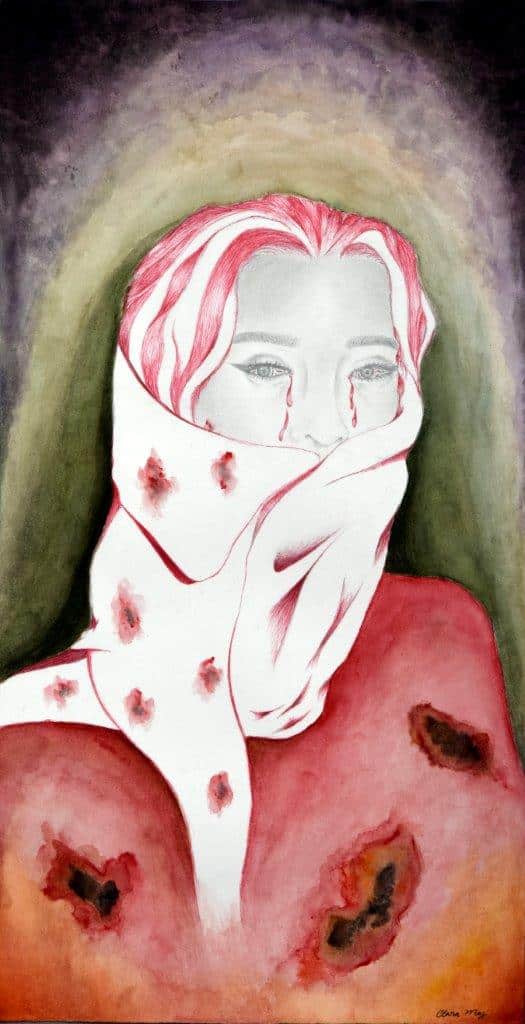
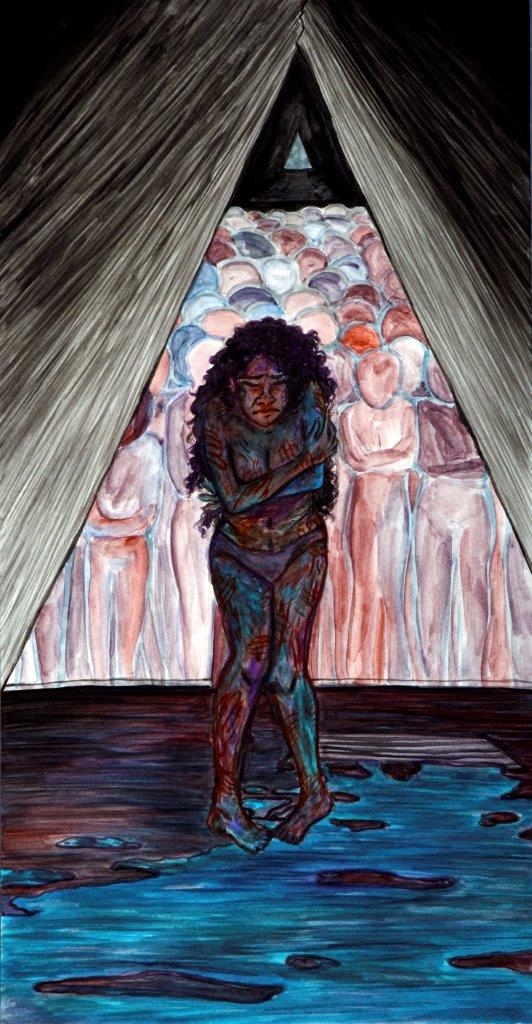
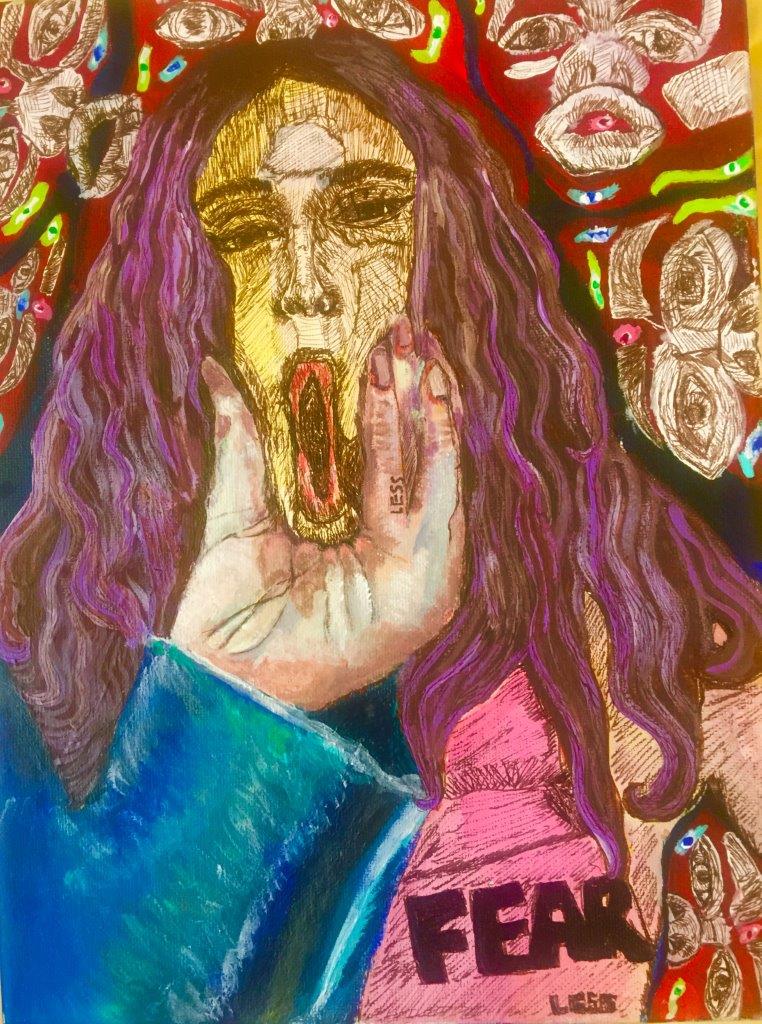
(Source: United Nations Exhibit on Sexual Violence in Conflict: Youth Speak Out Through the Arts, June 2020)
While it is important to address PTSD as a possible consequence of CRSV, it is also important to acknowledge the possibility of Post-Traumatic Growth (PTG). PTG refers to positive adaptations to traumatic experiences and memories that have also been recorded among victims/survivors of CRSV, led by experiences such as the denouncement and release of guilt, shame, or self-blame within the victim/survivor. Psychologically, a few conditions promoting PTG include the opportunity to develop new or deepen existing personal relationships (for example through mutual support, processing, and recovery), the discovery of new livelihood opportunities, or finding one’s political voice. Such experiences, when they do occur, can provide insight into what the needs of victims/survivors are.
Here you can watch the short video of the International Committee of the Red Cross (ICRC) on “sexual violence in the Democratic Republic of the Congo: Telling the story and overcoming the trauma”:
(Source: YouTube, International Committee of the Red Cross (ICRC)
Example: Psychosomatic Illness (The Hwa -Byung “Anger Syndrome”)
Psychosomatic consequences refer to experiences related to health that encompass both physical and psychological dimensions. While the manifestations of psychosomatic illnesses appear physical, they are characterized by their psychological origin. These consequences include sleep disturbances, digestive problems, unexplained pain, headaches, migraines, tension, shaking, and difficulty caring for oneself, to name a few.
Hwa-byung (HB) is a culture-related syndrome characterized as a disease of suppressed anger. Decades post-conflict, it has been recognized among former “comfort women” (women and girls forced into sexual slavery by the Imperial Japanese Army during World War II). HB is associated with a myriad of symptoms, both physical and psychological, which include the feeling and expression of anger, helplessness, heat, and respiratory stuffiness. Furthermore, women may be at higher risk for developing somatic illnesses due to a possible inclination to internalize, rather than externalize, anger.
HB, originally recognized in Korea, is believed to be caused by social injustice, for which reason it is thought that interventions such as an acknowledgment of suffering, government apology, and assistance/compensation programs are considered necessary for relieving both psychological and physical symptoms of HB.
II. Identity and Relational Consequences: Children Born as a Result of CRSV and Self-Esteem
Due to the extremely destructive and violating nature of CRSV, victims/survivors may lose or experience profound alterations to their sense of self, or to what has commonly or previously provided a sense of meaning and purpose to existence (such as family relations, a sense of safety, and overall well-being).
Example: Children Born as a result of CRSV
In the genocide against the Tutsi in Rwanda in 1994, there were an estimated 10,000-25,000 children born as a result of genocidal sexual violence. Cross-culturally among such cases, language used to discuss these persons reflects rejection and heavy stigma, and therefore fails to recognize their humanity beyond the circumstances of their conception. For them, various psychological experiences can occur as a result, including the transmission of inter-generational trauma (with their upbringing in some way reflecting the traumatic nature of their conception), socio-economic adversity (stemming from their stigmatized position in society), and difficulties in establishing a social and relational identity, even with their mothers. The following quote reflects a mother’s perspective on the issue:
“(…) I am married but my husband doesn’t accept her. So sometimes I think that it is her fault, the things that happened to me. When I was seeing her [daughter], the situation I passed through during genocide was immediately coming in my mind. I was seeing the man who raped me when I was 15. Nothing was making me love her at that time (…). As I said, her presence was reminding me of the horrible situation I was living in during genocide. Yet I was also a child who was in need of care. Also, I was poor while raising her. When I was pregnant I was even advised to abort, but I did not do it. Now I try to tolerate her because I pray.” (Myriam Denov, Laura Eramian, Meaghan C. Shevell, “You Feel Like You Belong Nowhere”, 2020, 52)
Importantly, children born as a result of CRSV have for a long time received less attention as part of large-scale agendas for addressing the consequences of CRSV. Despite, for example, the strains between mothers and children, access to psycho-social programming for addressing these issues has been lacking. The stigma ascribed to children born as a result of CRSV, among entire communities, labels them as “representations of violence” and “reminders of bad feelings”. This is not only reflected in deeply strained and disjunctive mother-child relationships but also in the profound psychological sequelae associated with children born as a result of CRSV (including isolation, guilt, depression, and difficulties with attachment and bonding). The following quotes reflect the perspectives of children born as a result of CRSV:
“I am always asking my mom why she didn’t want to be with us while she has got other children that she is raising as a caring mom, but not us. I am always wondering why she doesn’t want to tell us who is our father, nor even raising us as her own children.” (Myriam Denov, Laura Eramian, Meaghan C. Shevell, “You Feel Like You Belong Nowhere”, 2020, 47)
“Yes, our mum treats us [siblings] differently. She is caring [with] them. At home, she wants me to do heavy activities, even to cultivate our land. They are fifteen and twelve years old respectively. My mother seems to be unhappy with me.” (Myriam Denov, Laura Eramian, Meaghan C. Shevell, “You Feel Like You Belong Nowhere”, 2020, 48)
Example: Self-Esteem (and Related Issues)
The psychological wounds inflicted by CRSV can have a notable and complex corrosive impact on self-esteem. Negative self-evaluations following CRSV can negatively affect functioning in many areas of life, such as in education, and the development of personal relationships, and can deeply challenge one’s personal resources for coping with stressors. Many psychological impacts have been linked to the consequence of decreased self-esteem among victims/survivors of CRSV, including the following negative coping mechanisms: substance abuse, self-injurious behaviors, self-neglect (e.g. withdrawal from education, self-isolation, retracting from available support or not providing oneself with daily sustenance) and suicidality (considered, attempted, or completed). Though ultimately harmful, these consequences are a response to emotional distress in the short term.
Stigmatized psychological strategies
Stigmas, such as those surrounding victims’/survivors’ psychological strategies in traumatic situations, further exacerbate these impacts. For example, the psychology behind the freezing responses (termed ‘tonic immobility’) has in many instances been wrongfully regarded as an insufficient response on the part of the victim/survivor, being questioned despite an evident lack of consent and clear physical/psychological brutality. In the case of a response such as tonic immobility (referring to a catatonic or ‘death-like’ state of paralysis/withdrawal), a victim/survivor of CRSV may experience induced vocal suppression, analgesia (reduced sensitivity to pain), various other types of inhibitory responses (muscle paralysis, low respiration, and heart rate), inability to call out or scream. Despite these realities, stigmas can be so pervasive as to cause self-blame of involuntary responses. Stigmatization reinforces the trauma of survivors, adding insult to the injury already caused.
Risk of re-victimization
Furthermore, it is possible that CRSV makes a person more vulnerable to later instances of sexual, or other forms, of victimization. Both a reduced perception of self-worth or a feeling of helplessness in response to negative emotions, as well as ecological factors (e.g. economic vulnerability, displacement, and continuing conflict) can play a role in this extreme injustice.
III. Solace Ministries and Community-Based Psychosocial Therapy (CBS): Two Best Practice Examples from Rwanda
Multiple kinds of psychological therapies have been used to support the healing of victims/survivors of CRSV, such as narrative exposure therapy (which helps individuals to establish a coherent life narrative in which traumatic experiences are contextualized and is often used for refugees), eye movement desensitization and reprocessing (EMDR), and group therapy. Many organizations – based in the countries itself and concerned with the psychological needs of victims/survivors of conflict-related sexual violence – offer community-based psycho-social therapies (interventions that are experienced with a peer-support structure). Psychosocial recovery is aided by the experiences and reflections shared between peers of similar cultural backgrounds, who carry similar experiences and can make meaning of these together.
Solace Ministries
Solace Ministries in Rwanda is a non-profit, non-governmental, faith-based organization offering comfort to victims/survivors of the genocide against the Tutsi of 1994. Since 1999, Solace Ministries has provided long-term support to over eight thousand families (around 50,000 people in total). The services and projects of Solace Ministries are varied and include trauma counseling (individual and peer-based group counseling), community-based programs (e.g. for generating income), educational support and sponsorship, shelter projects, and medical assistance (clinical care). Furthermore, Solace Ministries supports all victims/survivors without discrimination – men, women, and children, including orphans and also children born as a consequence of CRSV. Being a faith-based organization, the support of Solace Ministries allows for the role of faith to be present, allowing also for spiritual healing to occur. Counseling is at the heart of all their activities. You can read more about their counselling program in the book: And I Live On (pages 208-213; pages 230-231).
Community-Based Psychosocial Therapy (CBS)
CBS exclusively offers sociotherapy-based interventions and projects, which is a group-based therapy or counseling. However, CBS includes both survivors and perpetrators in its psycho-social efforts to address the aftermath of the genocide against the Tutsi in Rwanda in 1994. This reflects a best practice example because this creates a space for possible dialogue to occur, which can foster healing and address underlying community tensions and hostilities in a safe and regulated trauma-informed environment. This can help repair the social and relational consequences of CRSV (fractured social networks, intergenerational legacies of trauma, prevention of isolation, restoration of meaning, and opportunities for forgiveness) which further feeds into possibilities related to other pillars of holistic care. The localized nature of these services also promotes cultural relevance and sensitivity.
The following story highlights how CBS offers these possibilities:
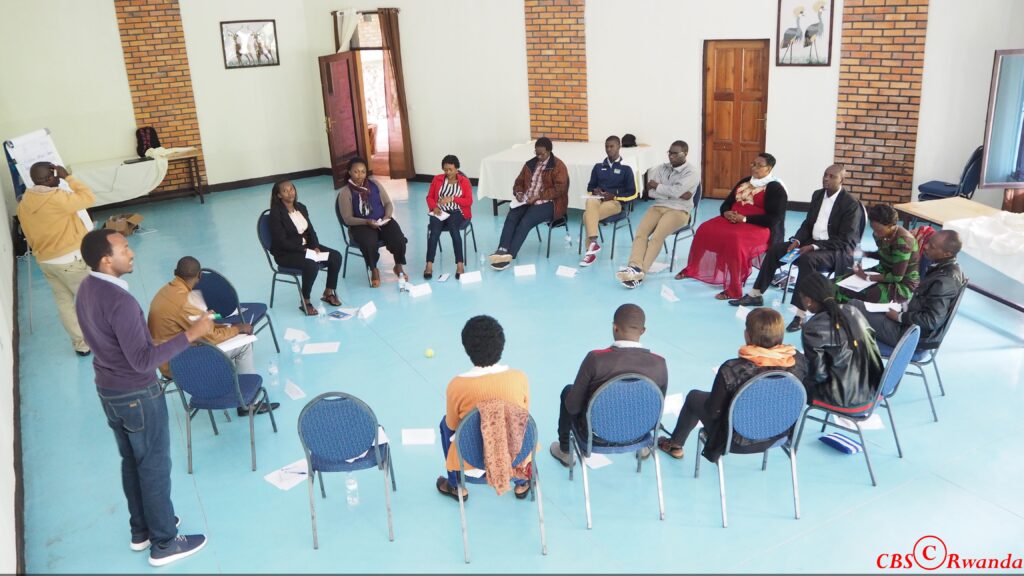
(Source: CBS Rwanda, CBS Approach and Philosophy)
The psychological and psycho-social avenues of support available to some victims/survivors reflect a second pillar of holistic care. Within this pillar, the aims are for victims/survivors to, over time, grow in their feelings of safety, trust, love, and self-worth. Different therapies have different aims; for example, individual therapy offers personalized processing of trauma (e.g. existential feelings, addressing harmful coping mechanisms or internal feelings of shame or self-blame), while group-based modalities might better address consequences arising from social dynamics (e.g. community-based tensions or feelings of distrust). In any case, community-based interventions are common among organizations addressing the psychological pillar of holistic care and this recognizes the collective nature of the trauma caused by genocidal sexual violence.

Sources ( a selection):
- Carolina Botero-García, Ana María, Alejandra Rodríguez, Daniela Rocha, “Post-traumatic Growth and Resilience on Conflict-Related Sexual Violence: A Set of Systematic Reviews of Literature”, Social Sciences, Vol. 12, Issue 5 (2023), 1-12.
- Kimberley Anderson, Ivan Komproe, Amra Delić, Esmina Avdibegović, Elisa van Ee, “A Dual-Model of Post-traumatic Stress and Post-traumatic Growth in a Community Sample of Female Conflict-Related Sexual Violence Survivors from Bosnia and Herzegovina”, Journal of Human Trafficking, Enslavement and Conflict-Related Sexual Violence, Vol. 1, Issue 1 (2020), 65-86.
- Sung Kil Min, Chang Ho Lee, Joo Young Kim, Eun Ji Sim, ‘Posttraumatic Stress Disorder in Former “Comfort Women”’, Department of Psychiatry and the Institute of Behavioral Science in Medicine, Vol. 48, Issue 3 (2011), 161-169.
- Philipp Kuwert, Heide Glaesmer, Svenja Eichhorn, Elena Grundke, Robert H. Pietrzak, Harald J. Freyberger, Thomas Klauer, “Long-Term Effects of Conflict-Related Sexual Violence Compared with Non-Sexual War Trauma in Female World War II Survivors: A Matched Pairs Study, Archives of Sexual Behavior, Vol. 43, Issue 6 (2014), 59-64.
- Juliana Kalaf, Evandro Silva Freire Coutinho, Liliane Maria Pereira Vilete, Mariana Pires Luz, William Berger, Mauro Mendlowicz, Eliane Volchan, Sergio Baxter Andreoli, Maria Inês Quintana, Jair de Jesus Mari, Ivan Figueira, “Sexual Trauma is More Strongly Associated with Tonic Immobility than Other Types of Trauma – A Population Based Study”, Journal of Affective Disorders, Vol. 215 (2017), 71-76.
- Kirsten Campbell, Elma Demir, Maria O’Reilly, “Understanding Conflict-Related Sexual Violence and the ‘Everyday’ Experience of Conflict Through Witness Testimonies”, Cooperation and Conflict, Vol. 54, Issue 2 (2019), 254-277.
- Catherine C. Classen, Oxana Gronskaya Palesh, Rashi Aggarwal, “Sexual Revictimization: A Review of the Empirical Literature”, Trauma, Violence, & Abuse, 6, Issue 2 (2005), 103-129.
- Myriam Denov, Laura Eramian, Meaghan C. Shevell, “You Feel Like You Belong Nowhere”: Conflict-Related Sexual Violence and Social Identity in Post-Genocide Rwanda”, Genocide Studies and Prevention, Vol. 14, Issue 1 (2020), 41-59.
- Sabine Schmitt, Katy Robjant, Thomas Elbert, Anke Koebach, “To add insult to injury: Stigmatization reinforces the trauma of rape survivors – Findings from the DR Congo”, SSM – Population Health, Vol. 13, Issue 1, (2013), 1-8.
- Jitske Rullmann, “How to Maintain Mental Health as a Professional Working with Survivors of Human Trafficking and Conflict-Related Sexual Violence”, Journal of Human Trafficking, Enslavement and Conflict-Related Sexual Violence, Vol. 3, Issue 2 (2022), 199-205.
Assignment
Select one of the following three for a 1,000-word reflection using academic literature.
-
- Read the following article on the newly developed psychotherapy platform “Aurora” developed for victims/survivors of CRSV in Ukraine: https://ukraine.unfpa.org/en/aurora_eng. Using this and other sections of this platform, as well as academic literature, explore the opportunities and limitations of this technology-based psychological intervention.
- Find two descriptions of group-based psycho-social services to victims/survivors of CRSV from different countries and organizations. Examine these in order to identify culturally relevant differences between the interventions, and explore how these differences matter for the psychological healing of these different groups.
- Read the article “How to Maintain Mental Health as a Professional Working with Survivors of Human Trafficking and Conflict-Related Sexual Violence” by Jitske Rullmann. Choose one of the recommendations proposed for managing a practitioner’s vicarious trauma and discuss the psychological mechanisms behind your selected coping strategy. How does it positively impact the mental health of the practitioner? What are some possible limitations in its effectiveness or viability?