Victims/Survivors of CRSV
Victims/Survivors of CRSV can be found around the globe, with different gender identities, ethnicities, races, ages, nationalities, economic status, physical health, ability, sexual orientation, religions, and so on. In principle, no one is immune from becoming a victim of such crimes, including women and girls, men and boys, and LGBTQI+ persons. Refugees and displaced persons, unaccompanied or separated children and orphans, elderly people and persons with disabilities, journalists and human rights defenders, and female or male combatants and forcibly recruited children are at heightened risks of becoming victims of such crimes. CRSV is often perpetrated in the context of other crimes against civilians, who may be targeted due to their actual or perceived sexual orientation and gender identity or membership to a political, ethnic or religious minority group. It is therefore important to understand the intersectionality of why certain people are or may be targeted for CRSV. While anyone can be a victim of CRSV, it is often stated that women and girls continue to be disproportionately affected and targeted due to the continuum of discrimination and violence they were exposed to before the conflict.
Both terms “victim” and “survivor” are used on this platform and elsewhere. “Victim” is commonly used within the criminal justice system (for example, to indicate that a person has been subjected to an international crime), while “survivor” is more often used to convey a person’s agency and resilience. It should furthermore be noted that victims of CRSV can be the direct victims, but also those who were indirectly victimized, such as those who were forced to watch or children born of CRSV. Which term to use, is primarily depended on the preference or self-identification of the individual concerned. Often the term “victim/survivor” is used, so that all situations are covered.
Here you can find some stories of and about people who became victims of CRSV:
Alain Kabenga (DRC)
Alain Kabenga is an activist fighting for the right of male victims of conflict-related sexual violence. He was himself a victim of CRSV in his home country, the Democratic Republic of Congo in 2011, where he was raped by two male government soldiers. He survived and fled the country. Later, he became a strong voice of activism in the Men of Hope Refugee Association in Uganda, a group of male survivors of CRSV raising awareness on CRSV against men and boys. He is now the Executive Director of One Voice against Conflict-Related Sexual Violence.
Pascasie Mukasakindi (Rwanda)
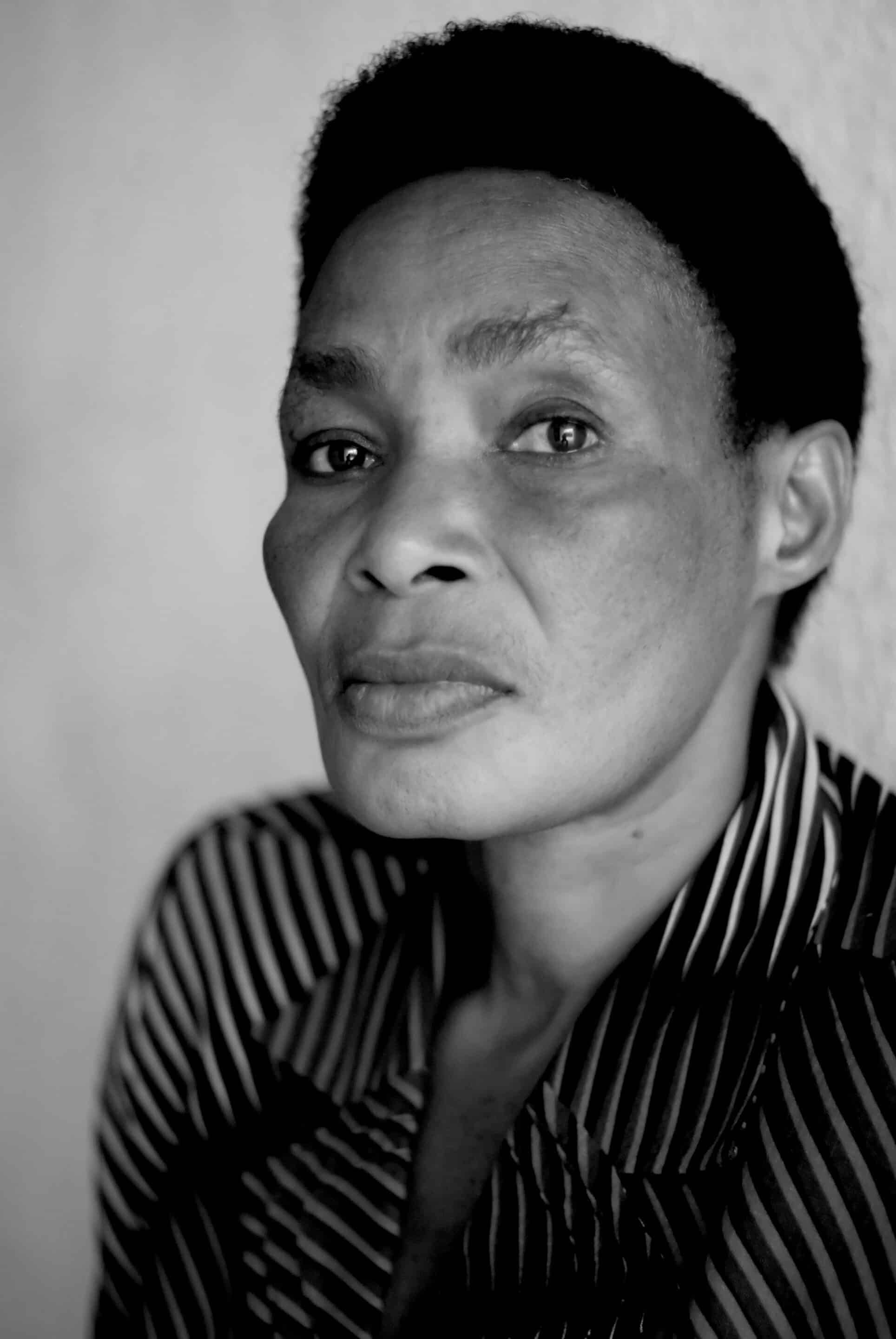
(Source: Samer Muscati, The Men Who Killed Me/And I Live On, 2009/2019)
Pascasie Mukasakindi is a survivor of the genocide against the Tutsi in Rwanda in 1994. Her husband and child were killed in the genocide. She survived genocidal sexual violence on different occasions; she had to perform gymnastics naked, was gang raped by many different Hutu-extremists, including very young boys, and kept in (sexual) slavery conditions. Her testimonial about her life before, during and after 1994 – taken in 2008 and 2018 – can be read in the book “And I Live On (2019)”.
Women, men, boys and girls (Ukraine):
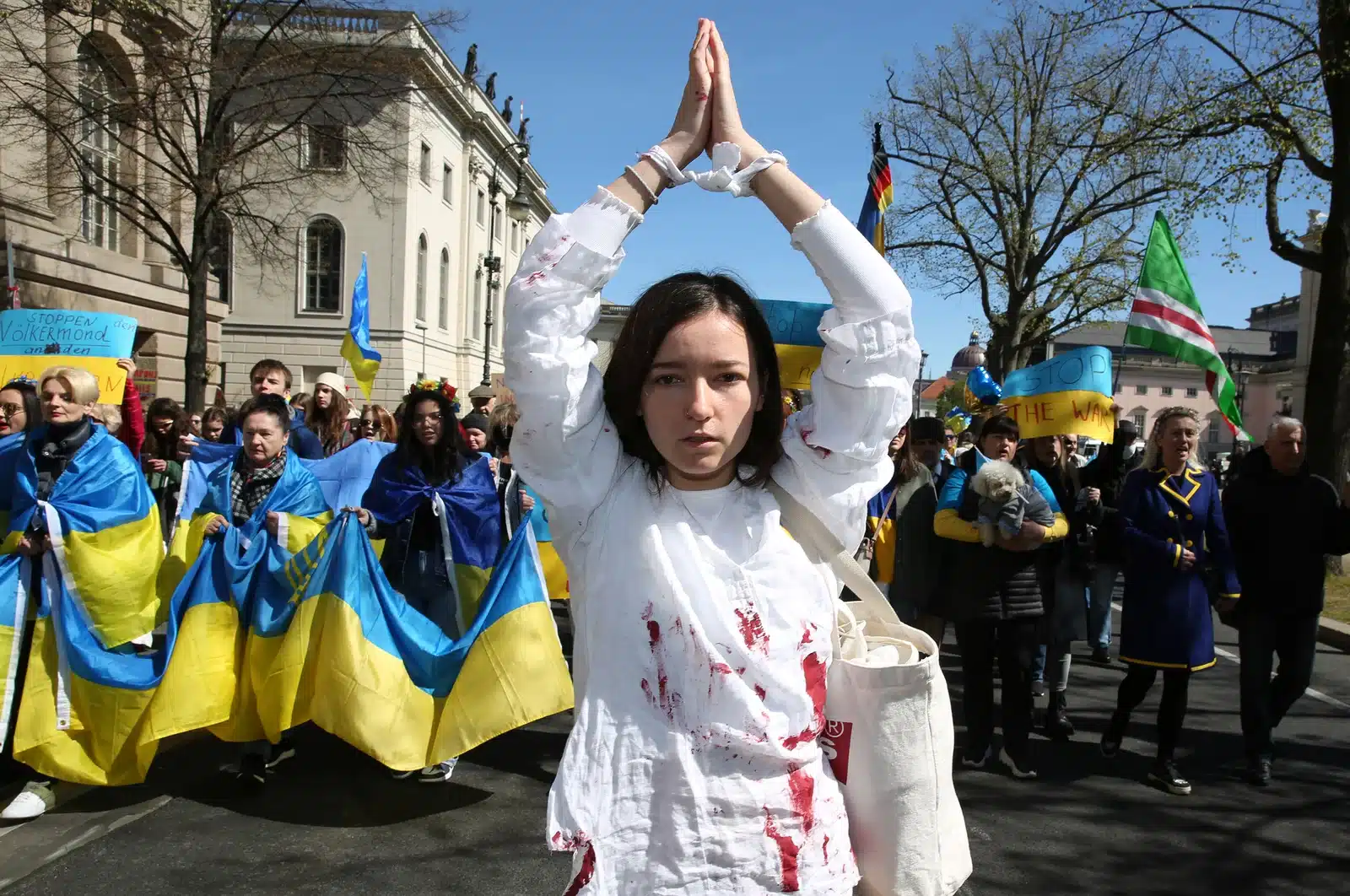
In the 2022 UN report of the Independent International Commission of Inquiry on Ukraine, the Commission documented patterns of rape and other sexual violence committed in Ukraine in areas occupied by Russian armed forces in 2022. Sexual violence had affected victims of all genders and ages. Victims, including children, were sometimes forced to witness the crimes, ands ranged from 4 to over 80 years old. Perpetrators raped the victims in their homes or took them and raped them in unoccupied dwellings.
For example, “In Kyiv Province, in March 2022, two Russian soldiers entered a home, raped a 22-year-old woman several times, committed acts of sexual violence on her husband and forced the couple to have sexual intercourse in their presence. Then one of the soldiers forced their 4-year-old daughter to perform oral sex on him, which is rape.”
“In Chernihiv Province and another province, the Commission has been investigating two cases of rape of women over 80 years old. An 83-year-old woman described how, while her village was occupied by Russian armed forces, she was raped by a Russian armed forces serviceman in her house, where her physically disabled husband was also present. In another instance, neighbours found the body of an older woman, partially undressed and with blood around her vagina. At the request of the family, the authorities did not perform a full autopsy.”
“Also in Chernihiv Province, in March 2022, Russian armed forces occupied a home for more than a week. The unit commander repeatedly sexually abused a 16-year-old girl during that time and threatened to kill other family members who tried to protect her.”
Colombia
Women, girls, men, boys, LGBTI+ people, indigenous, Afro-Colombian, and disabled people (Colombia):
According to the All Survivors Project: “Conflict-related sexual violence (CRSV) was committed by all parties to the decades-long armed conflict in Colombia, including state security forces, members of paramilitary organisations and non-state armed groups. A peace accord formally ended the conflict between the government and Revolutionary Armed Forces of Colombia – People’s Army (FARC-EP) in 2016, but widespread insecurity persists in the context of which CRSV continues to be reported. Over 32,500 victims of CRSV have been registered by the National Victim’s Unit of whom over 2,600 are male and 498 are LGBTI. Men and boys, including from indigenous and Afro-Colombian communities, and people with disabilities, have been the targets of CRSV, both by state security forces as well as at the hands of armed groups as punishment for refusing to join them or for supporting a rival group. Unlawfully recruited children, including boys, have also been subjected to CRSV. Sexual violence has been committed both by state security forces and by armed groups against lesbian, gay, bisexual, transgender and intersex (LGBTI+) people as a form of “corrective violence” or to “cleanse the population”.
Kim Bok-Dong (South Korea):
Kim Bok-Dong was interviewed by a news reporter from “Asian Boss” at the age of 92. She was a survivor of the forced sexual enslavement by the Japanese Army during World War II. Together with hundreds of thousands of other women and girls from countries such as Korea, China, Philippines, and the Netherlands, they were forced into sexual slavery. Kim Bok-Dong dedicated her life to the cause of helping other survivors, but never got an official apology from the Japanese government. She passed away in 2019.
Yazidi women and girls (Iraq):
Thousands of women and girls from Iraq’s Yazidi minority have been raped, sold into sexual slavery, and forced to convert by the Islamic State (IS) terrorist group. Many of them are children, aged 14/ 15 or even younger. The Yazidis are a historically persecuted minority in the Middle East who practice an ancient, syncretic religion, which include some elements similar to Christianity, Judaism and other ancient religions. IS issued an admission and detailed justification of a systematic policy of mass sexual enslavement of the so-called “infidel” Yazidi women, especially if they don’t convert to Islam.
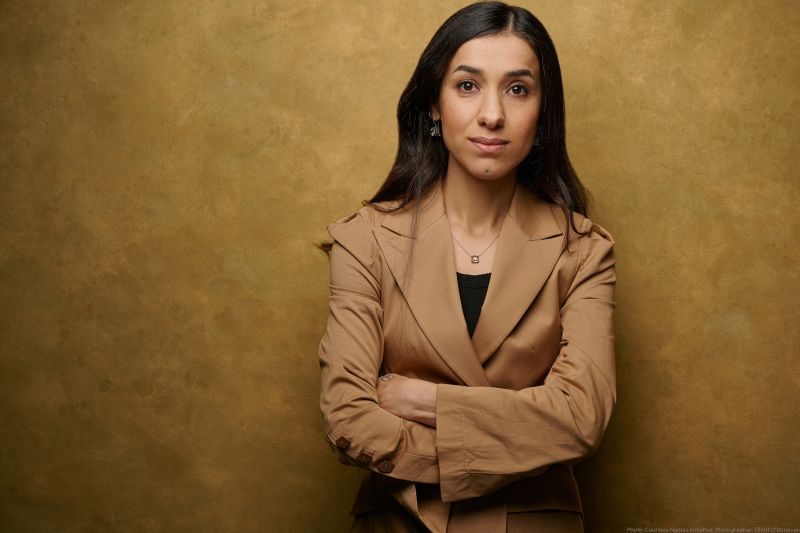
(Source: Nadia Murad, Nobel Peace Prize)
On this picture you see Nadia Murad, the Nobel Peace Prize winner of 2018: “Nadia Murad grew up in the village of Kojo in northern Iraq. She is a member of the Yazidi minority. (…) In 2014, militants from the Islamic State (IS) conquered Kojo and massacred several hundred men and elderly women. The IS claimed that the Yazidi were devil worshippers who had to be exterminated. Twenty-one-year-old Nadia Murad and other young women were abducted and held as sex slaves. Nadia was raped and threatened with execution unless she converted to the IS version of Islam. After some months, Nadia Murad managed to escape, and in 2015 arrived in Germany. There she chose to tell the international community what she had suffered. Murad hoped that doing so would result in her abusers being brought to justice for their crimes. In 2016, she was appointed the United Nations’ first Goodwill Ambassador for the Dignity of Survivors of Human Trafficking. (…) Nadia Murad has written an autobiography, “The Last Girl”. By recounting the atrocities perpetrated against her, she seeks to help ensure that future generations of girls and young women do not become victims of sexual violence in war.”
Perpetrators of CRSV
Perpetrators of CRSV are usually affiliated with either State or non-State entities. This may include national armed forces, police, or other security entities; terrorist entities or networks; local militias; armed groups; or traffickers. The profile of perpetrators may be evidenced by their uniform and insignia, distinctive modus operandi, or signature patterns of abuse associated with specific groups. Determining the motives of perpetrators may help to establish the link between sexual violence and conflict. In conflict-affected areas, State actors and non-State armed groups may, for instance, use CRSV to terrorize local populations believed to be supporters of their enemies.
Perpetrators of CRSV have different backgrounds, gender identities, ages and ethnicities and can be found in almost every conflict around the world. In principle, almost everyone can become a perpetrator of CRSV, when the right circumstances are in place.
Here you can find some stories of and about people who became perpetrators of CRSV:
Rwanda
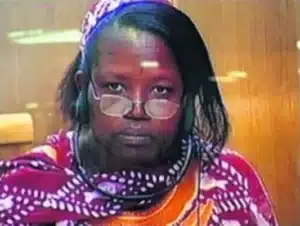 Pauline Nyiramasuhuko, a female perpetrator ordering genocidal sexual violence against Tutsi women and girls (Rwanda)
Pauline Nyiramasuhuko was the Minister of Family and Women’s Development during the Genocide against the Tutsi in Rwanda in 1994. She was convicted by the Trial Chamber of the Rwanda Tribunal for genocide and rape as a crime against humanity in June 2011, when she was 65 years old. Her conviction for rape as a crime against humanity was upheld by the Appeals Chamber on 14 December 2015. She was sentenced to 47 years’ imprisonment. Her case makes clear that women can certainly be perpetrators of CRSV as well (as the physical perpetrators of CRSV, the co-perpetrators by helping others to inflict CRSV, or the ones ordering CRSV, like Nyiramasuhuko did); something that was long contested as women themselves as well as others played or believed the “woman-card” (i.e. women cannot commit international crimes as they are basically caring creatures, not capable of doing harm).
Bosnia and Herzegovina
Duško Tadić, a perpetrator of male sexual violence (former Yugoslavia)
(Source: International Criminal Tribunal for the Former Yugoslavia)
According to the International Criminal Tribunal of the Former Yugoslavia (ICTY), “The trial of the former Bosnian Serb Democratic Party’s local board president from Kozarac, northwestern Bosnia and Herzegovina, made history in many ways. It was the first international war crimes trial since Nuremberg and Tokyo. Just as importantly, it was the first international war crimes trial involving charges of sexual violence. The trial proved to the world that the nascent international criminal justice system could end impunity for sexual crimes and that punishing perpetrators was possible.
The Trial Chamber found how after taking over the area of Prijedor, in northwestern of BiH, Serb forces confined thousands of Muslims and Croats in camps. In a horrific incident in the Omarska Camp, one of the detainees was forced by uniformed men, including Duško Tadić, to bite off the testicles of another detainee. In May 1997, the Trial Chamber found Tadić guilty of cruel treatment (violation of the laws and customs of war) and inhumane acts (crime against humanity) for the part he played in this and other incidents.
Two years later, on appeal, Tadić was additionally sentenced for grave breaches of the 1949 Geneva conventions: inhumane treatment and wilfully causing great suffering or serious injury to the body or health. In the Judgement, the Appeals Chamber set out that “Through his presence, Duško Tadić aided and encouraged the group of men actively taking part in the assault. Of particular concern here is the cruelty and humiliation inflicted on the victim and the other detainees”. In January 2000 Tadić was sentenced to 20 years’ imprisonment.”
Myanmar
Myanmar military committing CRSV against Rohingya women, girls, men, boys and transgender people (Myanmar)
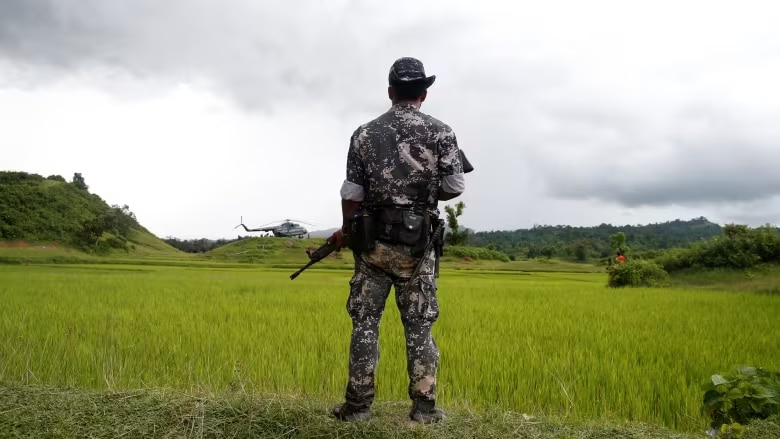
(Source: CBC, UN Report Condemns Sexual Violence by Myanmar Military against Rohingya, 22 August 2019)
More than 700,000 Rohingya Muslims from Myanmar fled to Bangladesh after being targeted in a campaign of murder, rape and destruction. Sexual violence has been carried out on a widespread and even genocidal scale by Myanmar’s security forces against the country’s Muslim Rohingya minority. As reported by CBC, a UN report said that its finding of genocidal intent toward the Rohingya was supported by “the widespread and systematic killing of women and girls, the systematic selection of women and girls of reproductive ages for rape, attacks on pregnant women and on babies, the physical branding of their bodies by bite marks on their cheeks, neck, breast and thigh, and so severely injuring victims that they may be unable to have sexual intercourse with their husbands or to conceive and leaving them concerned that they would no longer be able to have children.”
Ethiopia
Ethiopian state armed groups committing sexual violence against Tigrayan women, girls, men and boys (Ethiopia)
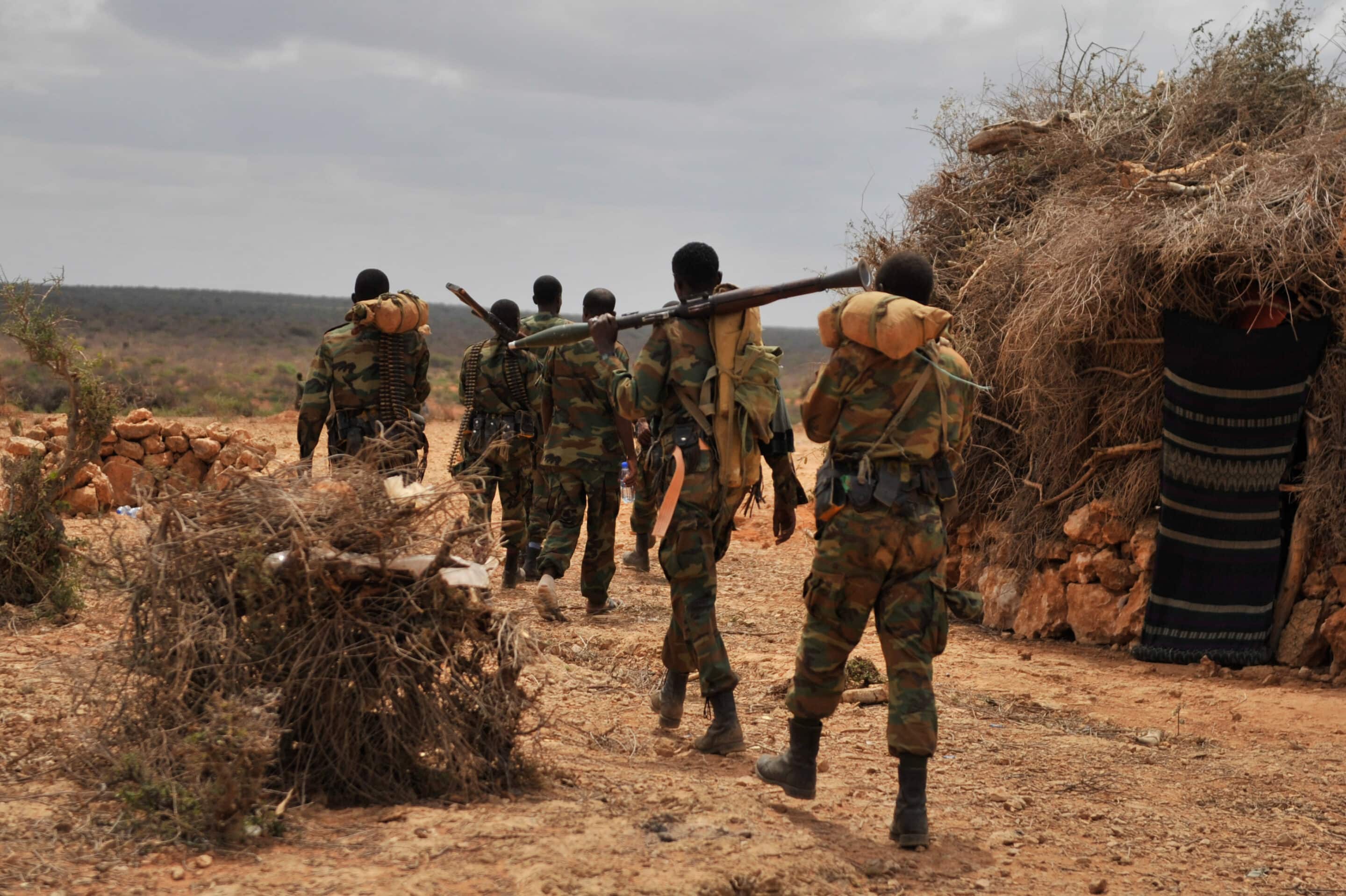
(Source: LawFare, Sexual Violence and the War in Tigray, 16 June 2021)
As stated by the World Peace Foundation: “On November 4th, 2020, the Ethiopian government and its allies launched a full-blown offensive, which marked a key event in unleashing of genocide on Tigray. (…) Perpetrators of CRSV in Tigray were state armed groups and their proxies, including Ethiopian, Eritrean, and regional Amhara forces. These attacks were directed against the Tigrayan people, an ethnic minority in Ethiopia, and took place in a climate of impunity precipitated by a war declared by the Ethiopian federal government. Women and girls, as well as boys and men in Tigray, have been subjected to rape, often perpetrated by groups of armed men. There have been numerous reports of sexual slavery, with women and girls held captive for days or weeks. Survivors have been told during the course of these attacks that the perpetrators seek to impregnate them, with the intent of eliminating the Tigrayan bloodline. Moreover, instances of extremely violent and brutal enforced sterilization by armed groups have been reported. The scale of the CRSV in Tigray is staggering both in its magnitude and brutality.”
DRC
Active perpetrator groups in the DRC (DRC)
In a study conducted by Lynn Lawry and others (2014), population-based surveys were used to determine which perpetrator groups were active in the DRC committing CRSV. The abstract of their article reads: “Combined with traditional qualitative data and testimonies, population-based studies may assist investigators and prosecutors of international judicial institutions in the identification of perpetrator groups and in defining the types of international crimes committed by active perpetrator groups during conflict. This research—based on a secondary analysis of data from a cross-sectional study of the North Kivu and South Kivu provinces and the Ituri district in Democratic Republic of Congo—provides a case study to demonstrate how population-based surveys might have value to International Criminal Court (ICC) prosecutions. These data reveal crimes committed during the conflicts constitute crimes against humanity and war crimes and identify the perpetrator groups most responsible for these crimes. Compared to current prosecutions at the ICC, this research finds that leaders of the Mai-Mai and Interahamwe among other groups not charged by the ICC, were most active in North Kivu and South Kivu provinces for perpetrating sexual and physical violence. Population-based surveys, in addition to traditional qualitative data and testimonies, may aid ICC investigators and prosecutors, particularly in the identification of perpetrator groups and in defining the types of international crimes committed by active perpetrator groups during conflict.”

Sources
- Usta Kaitesi, Genocidal Gender and Sexual Violence: The Legacy of the ICTR, Rwanda’s Ordinary Courts and Gacaca Courts (Intersentia, 2013).
- ICTR Trial and Appeal Judgments in the case (“Butare”).
- Alette Smeulers, “Female Perpetrators: Ordinary or Extra-ordinary Women?” International Criminal Law Review, Vol. 15 (2015), 205-251.
- Anne-Marie de Brouwer and Laetitia Ruiz, “Male Sexual Violence and Female Perpetrators of Sexual Violence in Conflict”, in Solange Mouthaan and Olga Jurasz, Sexual Violence in Transitional Justice (Intersentia 2017).
- Dara Kay Cohen, “Female Combatants and the Perpetration of Violence: Wartime Rape in the Sierra Leone Civil War”, World Politics, Vol. 65, Issue 3 (2013), 383-415.
- Refugee Law Project, Video: Man Can Be Raped Too, 2022.
Assignment 1
Victims/Survivors and Perpetrators of CRSV
Compare 5-8 different contexts in which CRSV is/was committed. Explain who the victims and perpetrators are/were in these contexts. What are the commonalities and differences between the victim and perpetrator groups?